Summary of the sources linked above. Verify anything time sensitive.
Prices and times are estimates. Check with the operator before you book.
Texas has two nonstop doors into Puerto Rico and a lot of one stop options behind them. The flight is longer than from Florida, so the trip rewards a full week more than a long weekend.
TL, DR
- Dallas Fort Worth and Houston Bush fly nonstop to San Juan in about 4 hours 30 minutes, covering roughly 2,160 miles.
- Austin, San Antonio and El Paso connect through those two or through Miami.
- No passport and no currency change, since Puerto Rico is a US territory.
- Mid January to mid April is dry season and peak season at the same time.
- With the longer flight, five to seven nights makes more sense than a weekend.
Can you fly nonstop from Texas to Puerto Rico?
From two airports, yes. Dallas Fort Worth and Houston Bush both run nonstops to San Juan, about 4 hours 30 minutes eastbound and closer to 5 hours on the way home, since you fly back against the wind. Austin, San Antonio and El Paso almost always connect, usually through DFW, Houston or a Florida hub, which puts a realistic door to door day at 8 to 10 hours.
Round trip fares from Texas run from about $280 (estimated) outside the holiday peaks. Two scheduling notes that matter more than the fare. Nonstops out of DFW and Houston tend to depart early, so a same day connection from Austin often means a 5am start. And the last bank of flights back to Texas leaves San Juan in the afternoon, so your departure day is rarely a beach day.
Puerto Rico runs on its own clock
Puerto Rico uses Atlantic Standard Time year round and does not change for daylight saving. From Texas that means 2 hours ahead in winter and 1 hour ahead in summer. It is a small gap, but it is the reason a 6am wake up feels fine on day one and why a 4pm return flight eats more of your last day than the schedule suggests.
Everything else works like a domestic trip, because it is one. No passport for US citizens, US dollars, no roaming charges on the major US carriers, and no customs on arrival. For a Texas family this removes the two slowest parts of an international Caribbean trip.
When is the best season to go?
December through April is the dry season, with highs near 84°F and low humidity by island standards. That window is also the most expensive, and Presidents Week and spring break are the two peaks to avoid if you can move your dates.
Here is the honest Texas angle on summer. July in San Juan averages highs around 88°F with a constant sea breeze, which is a milder day than a July afternoon in Houston or Dallas. Airfare and hotel rates drop sharply. The real trade is hurricane season, June 1 to November 30, with the risk concentrated from mid August to mid October. If you go in that stretch, book refundable rates and buy the trip insurance. Early June and late November are the two underrated weeks: dry enough, cheap, and outside the sharpest part of the storm risk.
How to build a first island itinerary
Five to seven days is the right length from Texas. The flight is long enough that a three day weekend wastes two of them. A structure that works:
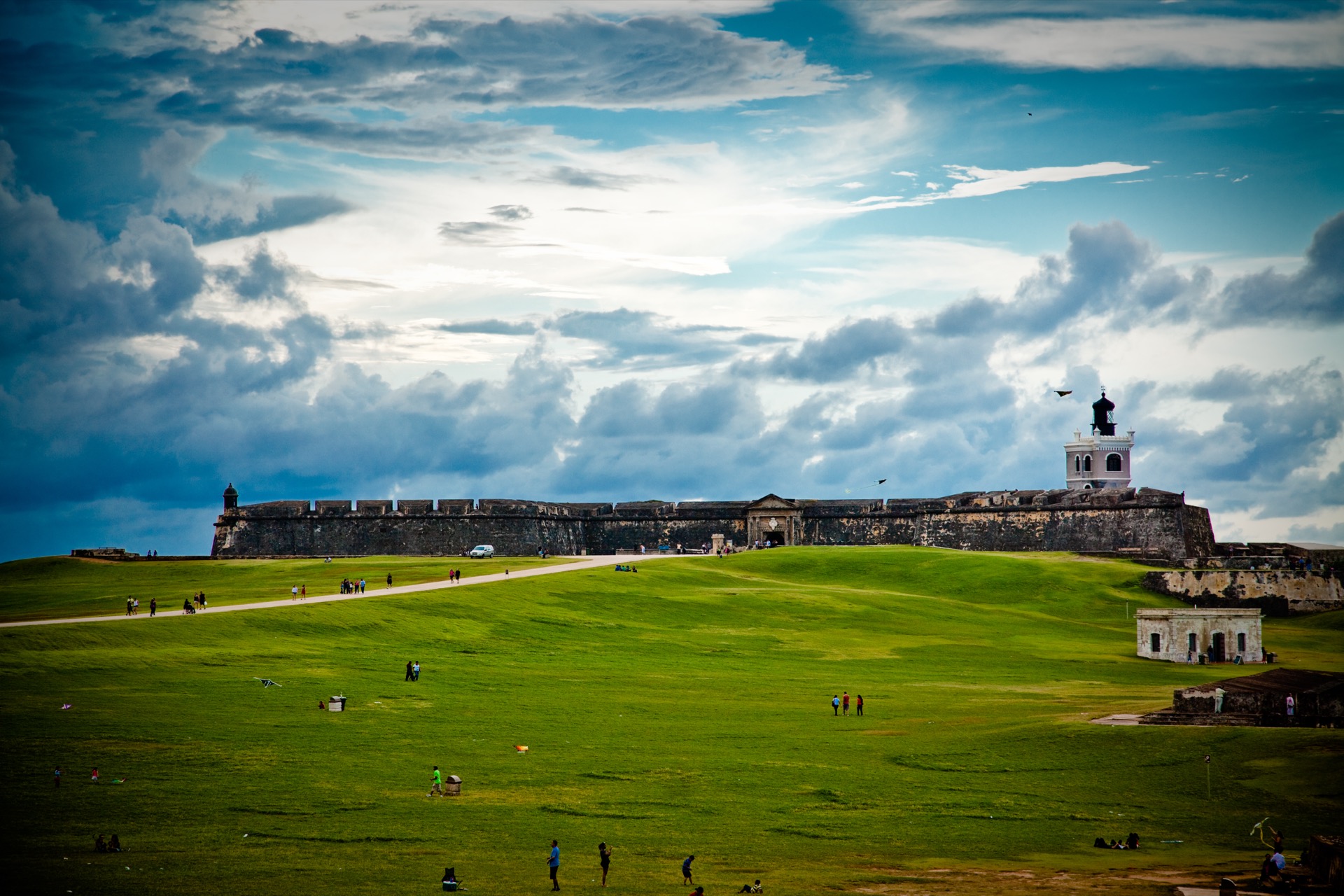
- San Juan, two days. Old San Juan for the forts, Santurce for food, Condado or Isla Verde for the beach base. El Morro entry runs from $10 (estimated) per adult and the same ticket covers San Cristobal within 24 hours. You do not need a car for these days and parking in the old city is a headache.
- El Yunque, one day. The main recreation area on PR-191 uses timed entry booked on recreation.gov, from $2 (estimated) per vehicle, and slots for dry season weekends go quickly. A guided trip from San Juan handles the reservation and the driving, from $80 (estimated) per person.
- A bioluminescent bay, one night. The glow tracks the moon, so pick nights near a new moon. Laguna Grande in Fajardo is the easy one from San Juan. Mosquito Bay in Vieques is stronger but needs the ferry or a short flight. Kayak tours run from $60 (estimated) per person.
- A beach island or the west coast, one to two days. The passenger ferry to Vieques and Culebra leaves from Ceiba, not Fajardo, from $2 (estimated) each way, and residents board first, so buy online the moment tickets release. If that feels fragile, drive west instead. Rincon for surf and sunsets, Ponce for the plaza and the museums.
Two days in the metro area, then pick two of the three excursions. Trying to fit all of them into five days means a lot of PR-3 traffic and not much beach.
Getting around
Rent a car for the days you leave San Juan, from $45 (estimated) per day. Rentals come with an AutoExpreso toll transponder, and the tolls are billed to the card, so do not stop at a booth looking for cash. Public transit outside the metro area is thin and rural roads are narrow and steep, which is a different driving experience than most of Texas.
If your trip stays in San Juan, skip the car entirely. Taxis and rideshare cover Old San Juan, Condado, Santurce and Isla Verde for a fraction of parking plus rental.
What to expect on the ground
Spanish is the working language and English is common in hotels, tours and restaurants in the metro area, less so in the mountains and small towns. Tap water in the metro area is treated and generally fine to drink. Tipping follows US practice at 15 to 20 percent. A good casual meal runs about $15 to $25 per person and a mofongo lunch at a roadside spot costs less.
Budget for a six day trip from Texas: from $280 (estimated) round trip airfare, from $150 (estimated) per night for a mid range hotel, from $45 (estimated) per day for a car on the days you need it, plus tours. Most couples land between $1,800 and $2,600 before shopping.
Prices are estimates and move with season and demand. Confirm the current rate before you book.
Best tours and tickets in San Juan
Curated from Viator. We may earn a commission if you book, at no extra cost to you.

Cave, Waterfall and River Adventure in Charco Azul from San Juan

Small-Group El Yunque Waterfall & Waterslides with Pickup

ATV Single Rider Adventure Near San Juan - Hacienda Campo Rico